Signs Viewing Distance Guide
Why Are They Important?
Viewing distance refers to the maximum distance from which a safety sign can be clearly seen, read, and understood. This distance depends on several factors, including the size of the sign, text height, symbol size, colour contrast, and lighting conditions.
When safety signs are designed and installed according to the correct viewing distance, they ensure that important warnings, instructions, and hazard information can be quickly recognised by workers, visitors, and the public.
Proper visibility is essential for maintaining safe workplaces, public facilities, construction sites, warehouses, and industrial environments. If a sign is too small or placed too far away, people may not be able to read it in time, which could lead to accidents, confusion, or non-compliance with safety regulations.
By selecting the correct sign size and positioning, organisations can improve safety awareness, regulatory compliance, and emergency preparedness, ensuring that critical safety messages are visible when they are needed most.
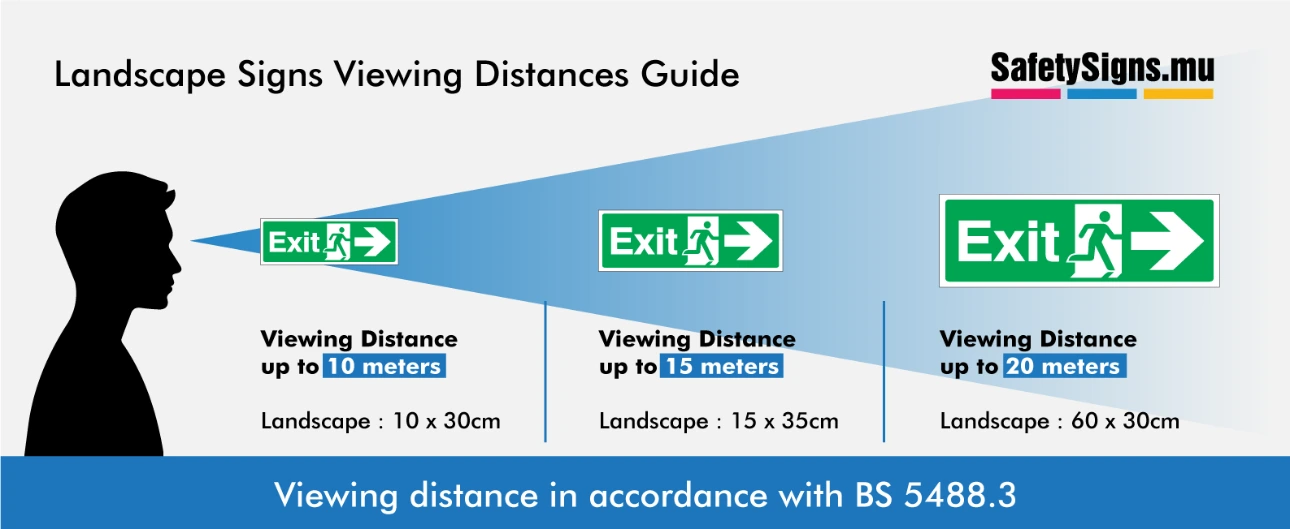
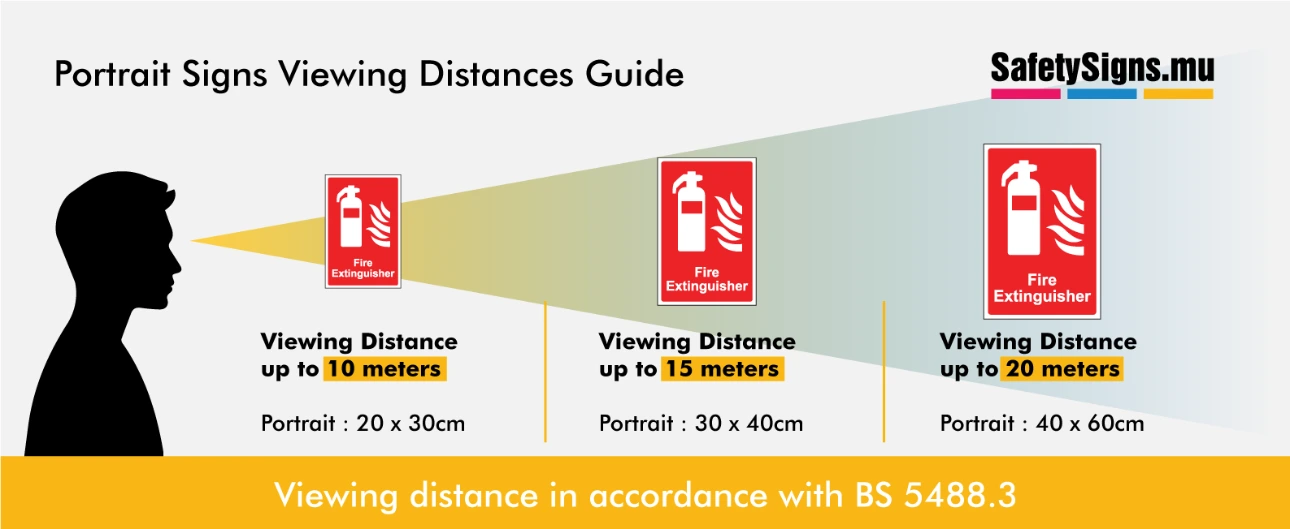
Key Factors Affecting Safety Sign Viewing Distance
Several factors influence how far away a safety sign can be clearly seen and understood.
Considering these elements helps ensure that safety messages remain visible and effective in any environment.
1. Sign Size
The size of the sign plays a major role in visibility. Larger signs can be read from greater distances, while smaller signs are better suited for close viewing areas such as doors, equipment, or corridors.
2. Text and Symbol Size
The height of letters and the size of safety symbols directly affect readability. Larger text and clear pictograms make it easier for people to quickly recognise the message from a distance.
3. Colour Contrast
High contrast between the background and the text or symbol improves visibility. Standard safety colours such as red, yellow, blue, and green help users quickly identify the type of safety message.
4. Lighting Conditions
Lighting significantly impacts how easily a sign can be seen. Well-lit environments improve visibility, while low-light areas may require reflective or photoluminescent (glow-in-the-dark) signs to ensure the message remains visible.
5. Sign Placement
Correct positioning of safety signs is essential. Signs should be installed at eye level and in clear sightlines, avoiding obstructions such as machinery, shelves, or structural elements.
6. Environment and Surroundings
Busy or cluttered environments can reduce sign visibility. Choosing the right size, colour, and location helps ensure the sign stands out and attracts attention.
By considering these factors, organisations can ensure that safety signs are clearly visible, easy to understand, and effective in preventing accidents and improving workplace safety.